
If you are planning a new website for your business, one of the first questions is usually simple:
How much is it going to cost?
The difficult part is that website pricing in the UK can vary significantly depending on what the website actually needs to do.
A simple informational website is very different from a digital platform that includes online bookings, customer forms, payments, automation or integrations with other business systems.
At AL Digital, we believe the better question is not simply:
“How much does a website cost?”
It is:
“What does my business need the website to achieve?”
This guide explains what affects website costs, what businesses should expect at different levels of investment and how to decide what is appropriate for your organisation.
Website Cost at a Glance
There is no single correct price for a business website.
The cost generally increases as the project requires more strategy, custom design, functionality, integrations and operational complexity.
A straightforward website designed mainly to establish a professional online presence will naturally require a different investment from a website expected to generate enquiries, process bookings, take payments and automate parts of the customer journey.
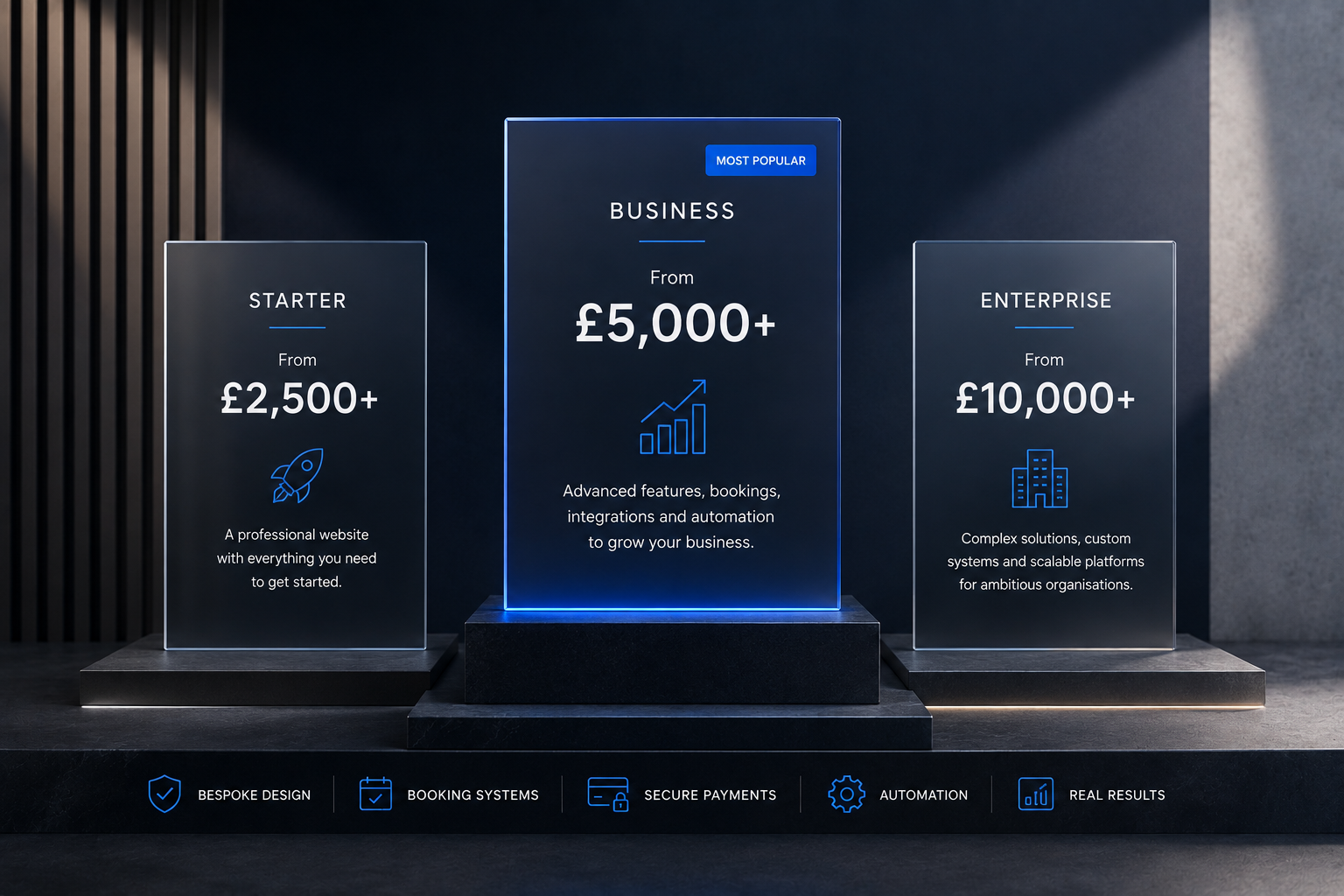
At AL Digital, our website projects currently begin from:
Suitable for businesses that need a professional, modern digital presence with a clear customer journey and strong foundations.
Designed for established businesses that require a more comprehensive digital system, potentially incorporating advanced customer journeys, booking functionality, integrations or additional automation.
For more complex projects requiring extensive functionality, integrations, bespoke workflows or larger digital ecosystems.
The final investment depends on the scope and requirements of the individual project.
What Actually Determines the Cost of a Website?
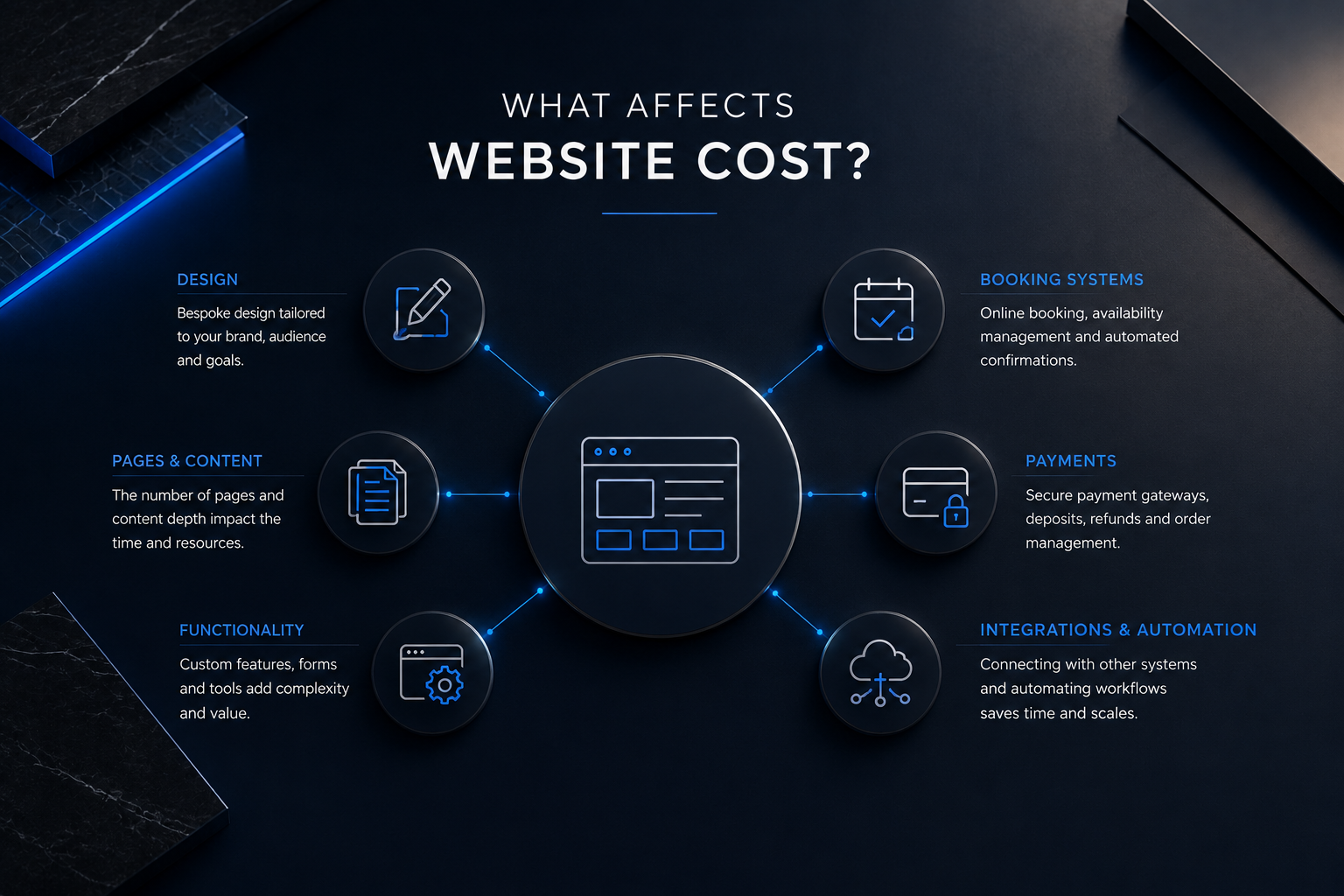
1. The Size of the Website
A five-page website requires substantially less work than a website containing dozens of service, location, industry or product pages.
More pages can mean additional design, copy structure, responsive layouts, SEO configuration, internal linking and testing.
However, page count alone does not determine the final cost.
A relatively small website with sophisticated functionality can be more complex than a much larger informational website.
2. Bespoke Design
Template-based websites can reduce initial development time, but they also create limitations.
A bespoke website is developed around the business itself — its brand, customers, services and commercial objectives.
That may include custom page layouts, conversion journeys, mobile experiences, service presentations, calls to action, interactive components and visual systems.
The objective should not simply be to make the website attractive.
The design should make it easier for the customer to take the action the business wants them to take.
3. Booking Systems
For businesses such as clinics, pharmacies, dentists, consultants, salons and other appointment-based organisations, online booking can significantly change the scope of a project.
A booking system may need to handle:
- service selection
- appointment availability
- customer details
- confirmation emails
- payment
- staff calendars
- cancellations
- reminders
- different locations or practitioners
This is why a website with integrated booking functionality will usually require a larger investment than a basic brochure website.
Explore AL Digital Healthcare Digital Solutions
4. Online Payments
If customers need to pay through the website, the payment journey must be designed carefully.
This could involve integrations with platforms such as Stripe or PayPal and may include:
- deposits
- full payments
- ecommerce checkout
- service payments
- payment confirmation
- refunds
- automated customer communication
Payment functionality should also work smoothly alongside the wider customer journey.
AL Digital’s founder previously built and operated a Shopify ecommerce business that progressed from storefront development and payment setup through paid acquisition and genuine customer sales.
5. Forms and Customer Journeys
Forms can range from a basic contact form to a sophisticated customer intake process.
For example, a healthcare business might require patients to:
That is significantly more involved than simply adding a contact form to a page.
Good website development considers the entire journey, not just individual elements.
6. Business Automation
A website becomes considerably more powerful when it connects with the way the business actually operates.
Automation might include:
- enquiry notifications
- customer confirmation emails
- lead capture
- booking confirmations
- internal workflows
- CRM integration
- payment workflows
- follow-up processes
This is one of the reasons AL Digital describes its work as building digital systems, rather than simply websites.
The website is often only the customer-facing part of a much larger process.
Cheap Website vs Professional Website: What’s the Difference?
Businesses can now create websites extremely cheaply using templates and website builders.
For some situations, that is perfectly appropriate.
A new business testing an idea may not initially require a large custom website.
The problem begins when a business expects a low-cost website to perform the same role as a professionally planned commercial system.
The difference is often not simply visual quality.
It is the thinking behind:
- how visitors arrive
- what information they see
- how services are presented
- where calls to action appear
- how enquiries are captured
- how bookings work
- how payments are taken
- what happens after someone converts
A £500 website and a £5,000 website may technically both contain a homepage, services page and contact page.
But they can be completely different products underneath.
When Should You Invest More in Your Website?
A larger investment becomes easier to justify when your website directly contributes to revenue or business operations.
For example, imagine a private clinic where one new patient could be worth hundreds or thousands of pounds over the course of their relationship with the business.
If a confusing booking journey causes prospective patients to leave, the commercial impact can quickly outweigh the cost of improving the website.
The same principle applies to:
- dental practices
- pharmacies
- professional services
- ecommerce businesses
- estate agencies
- gyms
- hospitality businesses
- other appointment or enquiry-driven organisations
The more commercially important your digital customer journey becomes, the more important it is to build it properly.
What Should Be Included in a Professional Website Project?
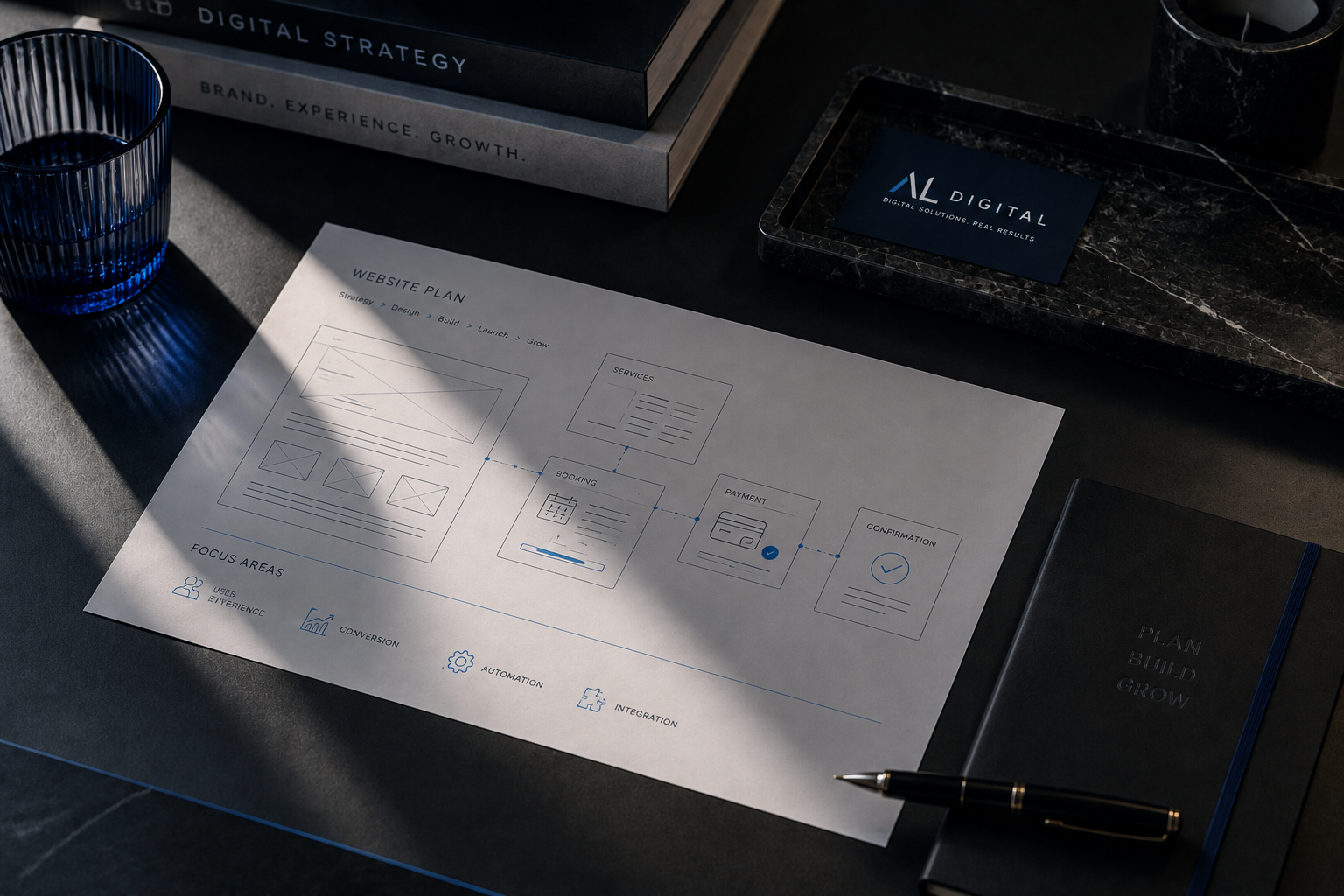
Strategy
Understanding the business, audience, services and objectives before development begins.
Customer Journey
Planning how visitors move from discovering the business to taking action.
Responsive Design
Ensuring the experience works properly across desktop, tablet and mobile.
Conversion Structure
Using clear calls to action, service pathways and enquiry points.
Technical Development
Building reliable website functionality and integrations.
SEO Foundations
Creating sensible page structure, metadata, internal linking and indexable content.
Testing
Checking forms, booking journeys, payments, responsiveness and functionality before launch.
Launch & Support
Moving the website into production and maintaining it where required.
Healthcare Websites Can Require Additional Consideration
Healthcare businesses often have more complex digital journeys than standard local businesses.
A patient might need to:
This makes clarity and ease of use particularly important.
AL Digital recently delivered a connected digital system for Gees Chemist, incorporating NHS and private services, patient journeys, forms, bookings and online payments.
That experience now informs how we approach digital systems for pharmacies, private clinics, dental practices and other healthcare providers.
View the Gees Chemist Case Study
Should You Redesign an Existing Website or Start Again?
Not every business needs an entirely new website.
Sometimes the better solution is improving what already exists.
A redesign may make sense if the current website has:
- confusing navigation
- poor mobile usability
- weak enquiry journeys
- outdated service presentation
- limited booking functionality
- disconnected systems
- poor conversion paths
- technical limitations that prevent growth
The first step should therefore be understanding the actual problem rather than automatically rebuilding everything.
How Long Does a Professional Website Take to Build?
The timeline depends on the project’s complexity.
A straightforward business website can be completed considerably faster than a project involving multiple integrations, payments, booking systems, bespoke customer journeys and automation.
Factors affecting the timeline include:
- number of pages
- complexity of functionality
- availability of content
- integrations
- feedback and approvals
- testing requirements
- third-party systems
A good agency should establish the scope before giving you a realistic delivery schedule.
How Do You Know What Your Website Should Cost?
Start with the outcome.
What should someone be able to do on my website?
Then:
What happens after they do it?
For example:
Once that journey is understood, the required technology becomes much clearer.
That is far more useful than choosing a website purely according to the number of pages it contains.
Build a Digital System, Not Just a Website
A professional website should support the wider business.
For some companies, that means creating credibility and generating enquiries.
For others, it means coordinating:
Website → booking → forms → payments → communication → internal workflows.
That is the approach behind AL Digital’s philosophy:
Digital Solutions. Real Results.
We build digital experiences around what the business and its customers actually need — rather than simply putting pages online.
Planning a new website?
Whether you’re starting from scratch, replacing an existing website or trying to improve a digital customer journey, we can help determine what your business actually needs.
Get a Free QuoteExplore Our Services