
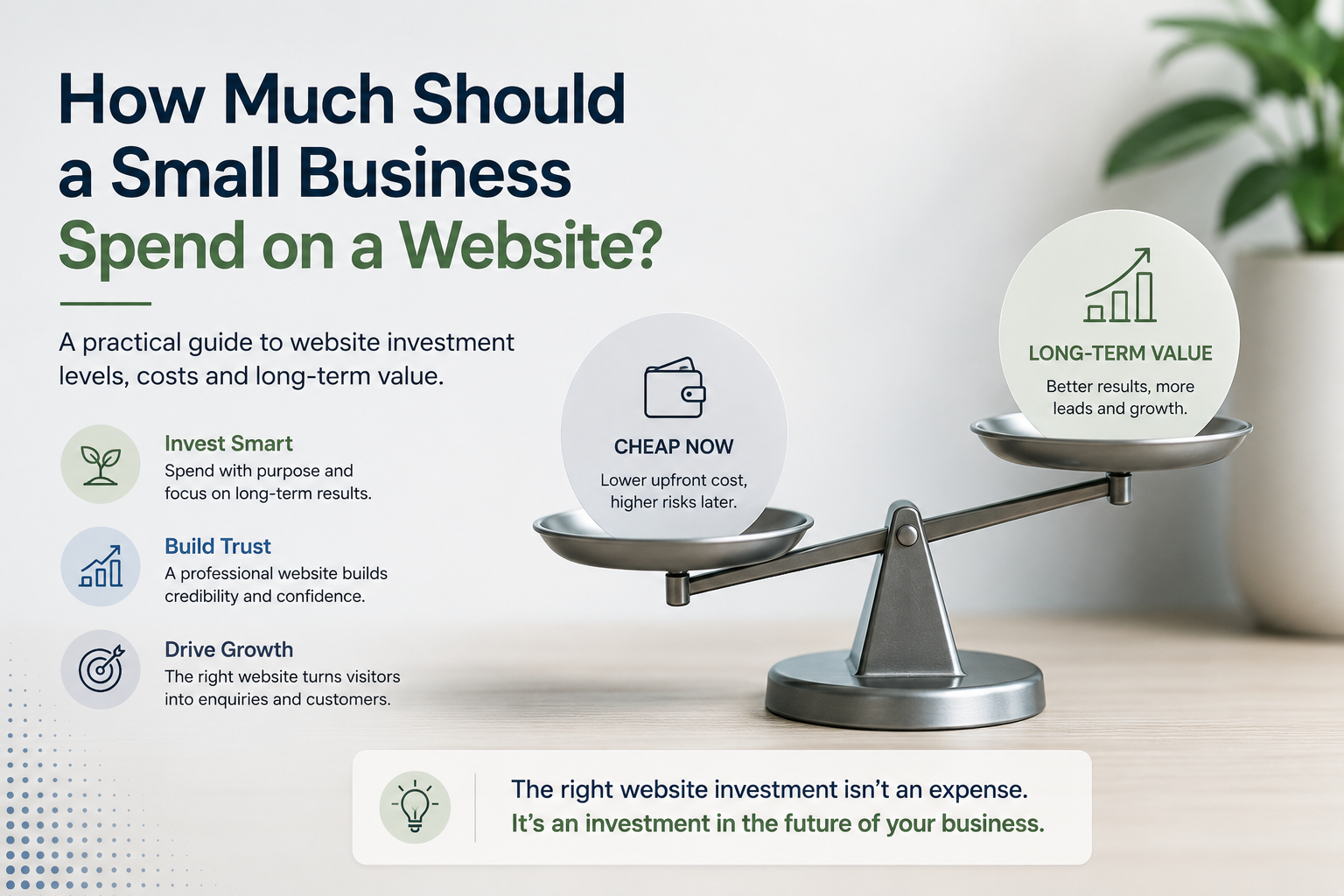
One of the most common questions small businesses ask is: How much should we spend on a website?
There is no single figure that suits every business. A sole trader who needs a clear online presence has different requirements from a growing company that depends on enquiries, bookings, payments or connected systems.
The better question is: What does the website need to achieve for the business?
A sensible website budget should reflect the role the site will play, the complexity involved and the value of getting the customer journey right.
Why Website Prices Vary So Much
Website prices vary because websites vary considerably in scope. What looks like a collection of pages may involve strategy, customer-journey planning, custom design, content, development, integrations, testing and ongoing support.
Cost can be influenced by:
- strategy and discovery
- the number and complexity of pages
- custom design and brand requirements
- copywriting and content support
- booking or appointment systems
- ecommerce and online payments
- CRM and email integrations
- automation and connected workflows
- member areas or customer portals
- SEO and content structure
- performance, analytics and accessibility
- security, quality assurance and testing
- ongoing optimisation and support
A simple five-page brochure website is not the same project as a lead-generation website connected to booking, payment and business-management systems.
What Level of Website Investment Fits Your Business?
It can help to think in broad levels: a basic website, a professional lead-generation website and a more bespoke digital platform.
The ranges shown below are general, indicative examples for the wider market. They are not fixed AL Digital packages or a substitute for a tailored scope.
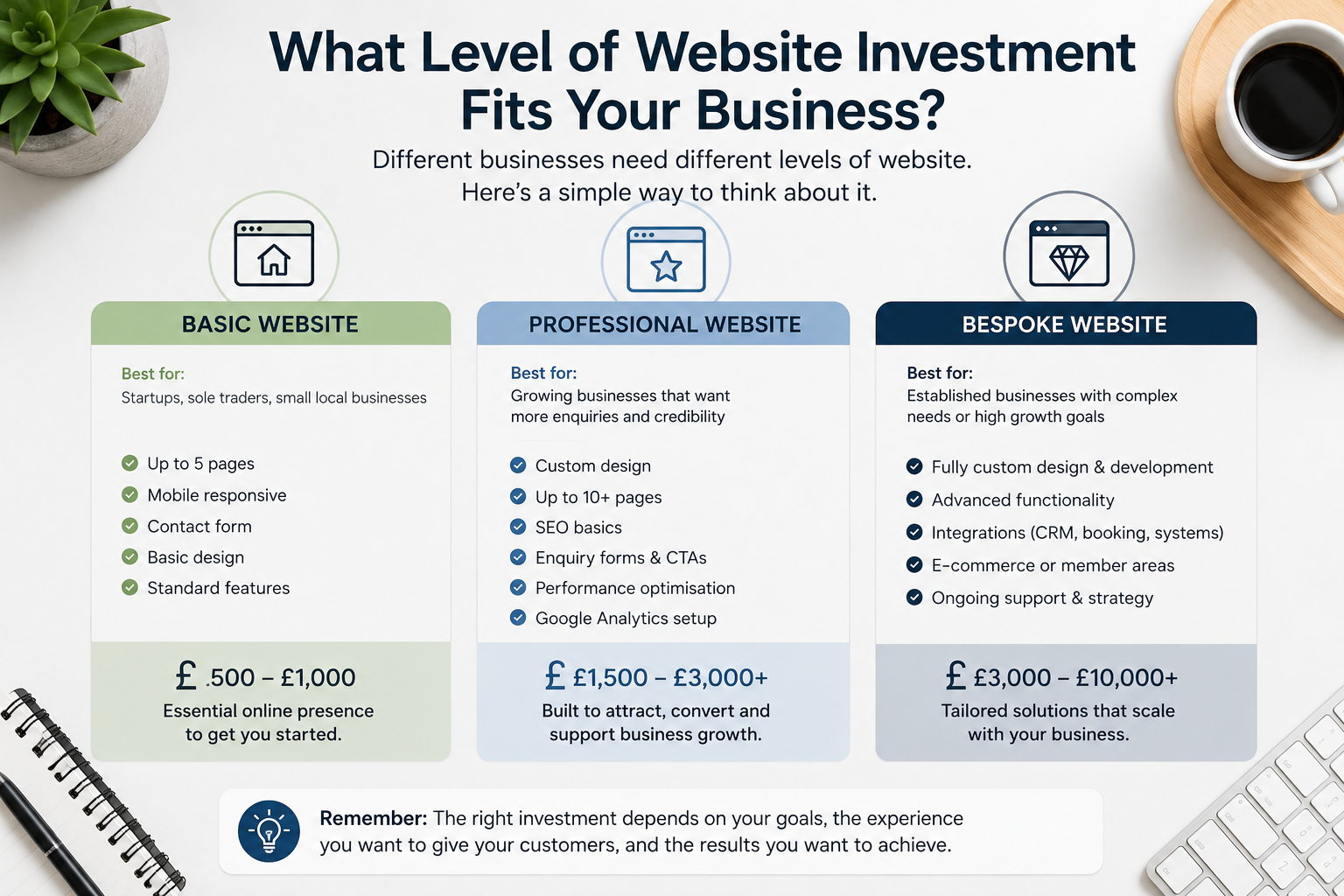
The right level depends on your goals, the experience customers need and the commercial role the website must perform. For a wider UK cost breakdown, read How Much Does a Website Cost in the UK?
When a Lower-Cost Website May Be Enough
A lower-cost website may be appropriate when the business is early-stage, the offer is straightforward and the website mainly needs to establish a credible online presence.
It may be enough when:
- the service range is small and easy to explain
- the website needs only a few essential pages
- there are no complex booking, payment or integration requirements
- most leads already come through referrals or offline relationships
- the initial objective is simply to be found, understood and contacted
A simple journey such as Home → Services → About → Contact can work well.
Basic should not mean careless. The website should still be clear, mobile-friendly, credible, secure, easy to contact and technically sound.
When a Professional Website Becomes Worthwhile
A more considered investment becomes worthwhile when the website is expected to support growth rather than simply confirm that the business exists.
This is often the case when the website must generate online enquiries, consultations, appointments, bookings, sales or qualified leads. It also matters when a business invests in advertising, SEO or higher-value services where trust and presentation influence decisions.
At this level, the website starts to operate as a commercial system. The work may include:
- customer-journey and information architecture planning
- decision-friendly service pages
- clear calls to action and trust signals
- better enquiry forms and conversion paths
- analytics and successful-enquiry tracking
- performance, mobile and search optimisation
Improving the website customer journey helps the business make better use of every source of traffic.
When Bespoke Investment Is Justified
Bespoke investment is usually justified when the website must support complex customer journeys or connect with the systems behind the business.
Examples include:
- complex booking or appointment rules
- CRM, email and payment integrations
- ecommerce, memberships or customer portals
- dashboards and account areas
- automated communications and workflows
- advanced forms or service qualification
- custom processes involving multiple systems
These projects require more strategy, user-experience design, development, testing, integration and optimisation. A bespoke website and a website builder solve different levels of business need.
What Actually Drives Website Cost?
The main cost drivers are not mysterious. The more a website needs to do, the more planning, design, development and testing it requires.
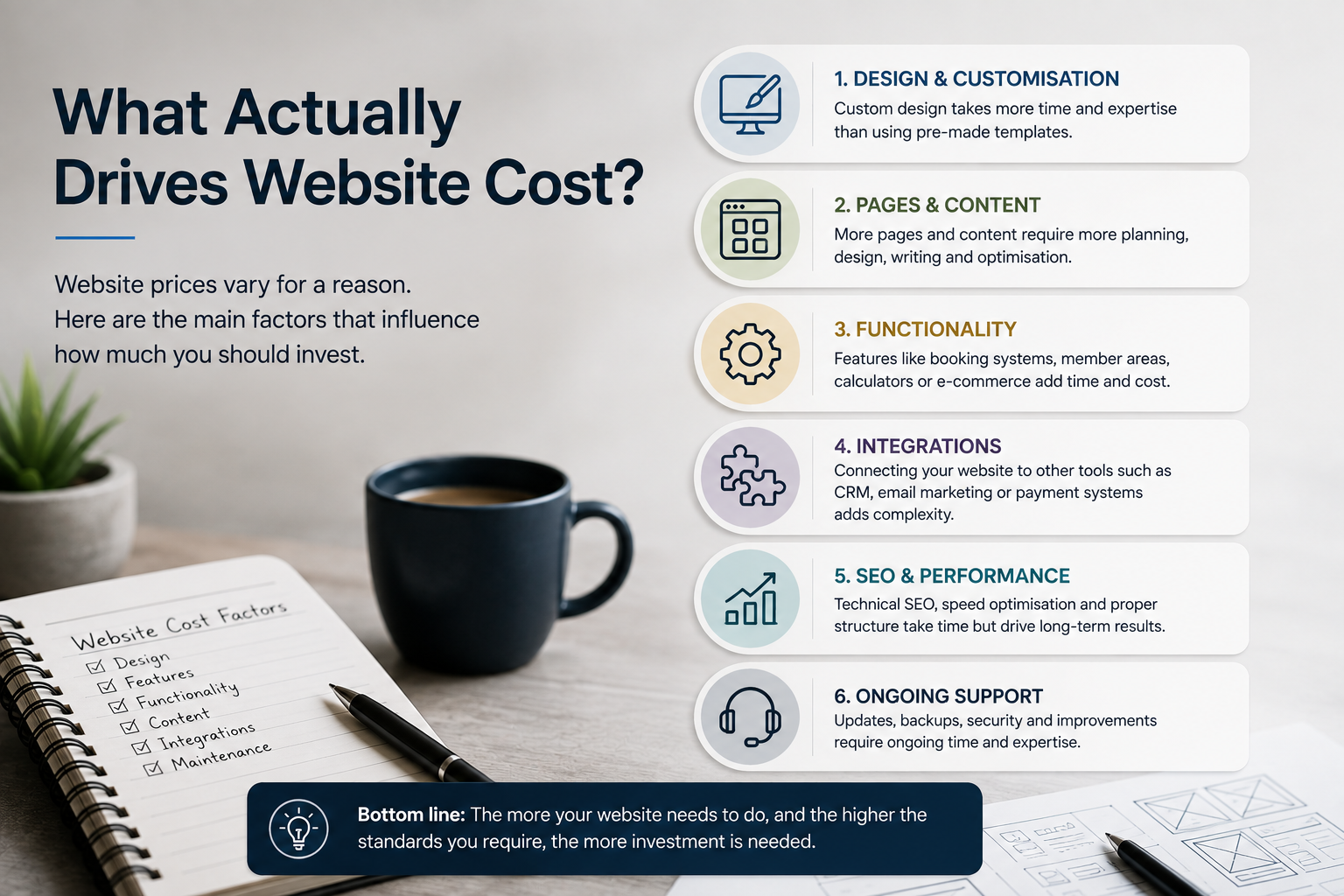
Design and Customisation
Custom design takes more time and expertise than adapting a pre-made template. It can be worthwhile when differentiation, credibility and a consistent customer experience are commercially important.
Pages and Content
More pages require more planning, design, writing, content migration and optimisation. Quality matters more than page count alone, but each important page should have a clear job.
Functionality
Features such as booking systems, calculators, member areas, ecommerce and advanced forms increase scope because they must be designed, configured and tested properly.
Integrations
Connecting a website to CRM, email marketing, payment systems or operational tools adds complexity. Good integration can remove manual steps, but it requires reliable technical implementation.
SEO and Performance
Technical SEO, page speed, mobile performance, analytics and a sound information structure take time. They help create a stronger foundation for search visibility and ongoing improvement.
Ongoing Support
Websites need updates, backups, security monitoring and continued improvement. The right support arrangement depends on how important the website is to daily operations.
Do Not Choose on Price Alone
Price matters, but the cheapest quote is not automatically the most economical option.
A low upfront cost can become expensive when the website must be rebuilt, cannot support required features, performs poorly, is difficult to update or creates a weak experience for customers.
Equally, a small business should not overinvest in unnecessary complexity. The aim is to match the solution to the genuine business requirement.
If the current website is already in place, first consider whether it needs targeted improvements, a redesign or a complete rebuild. Our guide to website redesign versus a new website explains the difference.
Think About the Total Business Value
A business website should be evaluated as an asset that supports customer acquisition, service delivery, trust and operational efficiency.
Consider the value of:
- helping prospects understand the offer more quickly
- presenting high-value services professionally
- reducing friction in enquiries or bookings
- connecting payments, forms and internal systems
- giving the team better information and fewer manual tasks
- creating a stable foundation for SEO, campaigns and referrals
Review relevant examples in our case studies, or explore the broader digital services that may form part of a website project.
Invest According to Your Business Stage
Early-Stage Business
Prioritise clarity, credibility and a simple way to make contact. Keep the scope proportionate, but avoid creating technical or design problems that will immediately restrict the next stage of growth.
Growing Business
Invest in a stronger customer journey, service-page content, lead capture, analytics, performance and the integrations that remove repeated manual work.
Established Business
Focus on scalability, system connections, security, accessibility and the experience across multiple services, locations or customer types.
The AL Digital pricing page explains how our own project levels are structured; an exact recommendation should follow discovery and a defined scope.
The Right Investment Today Builds Your Business Tomorrow
Choosing the right level of website investment is not about finding the cheapest option. It is about building the right foundation to attract, convert and grow in a way that fits the business.
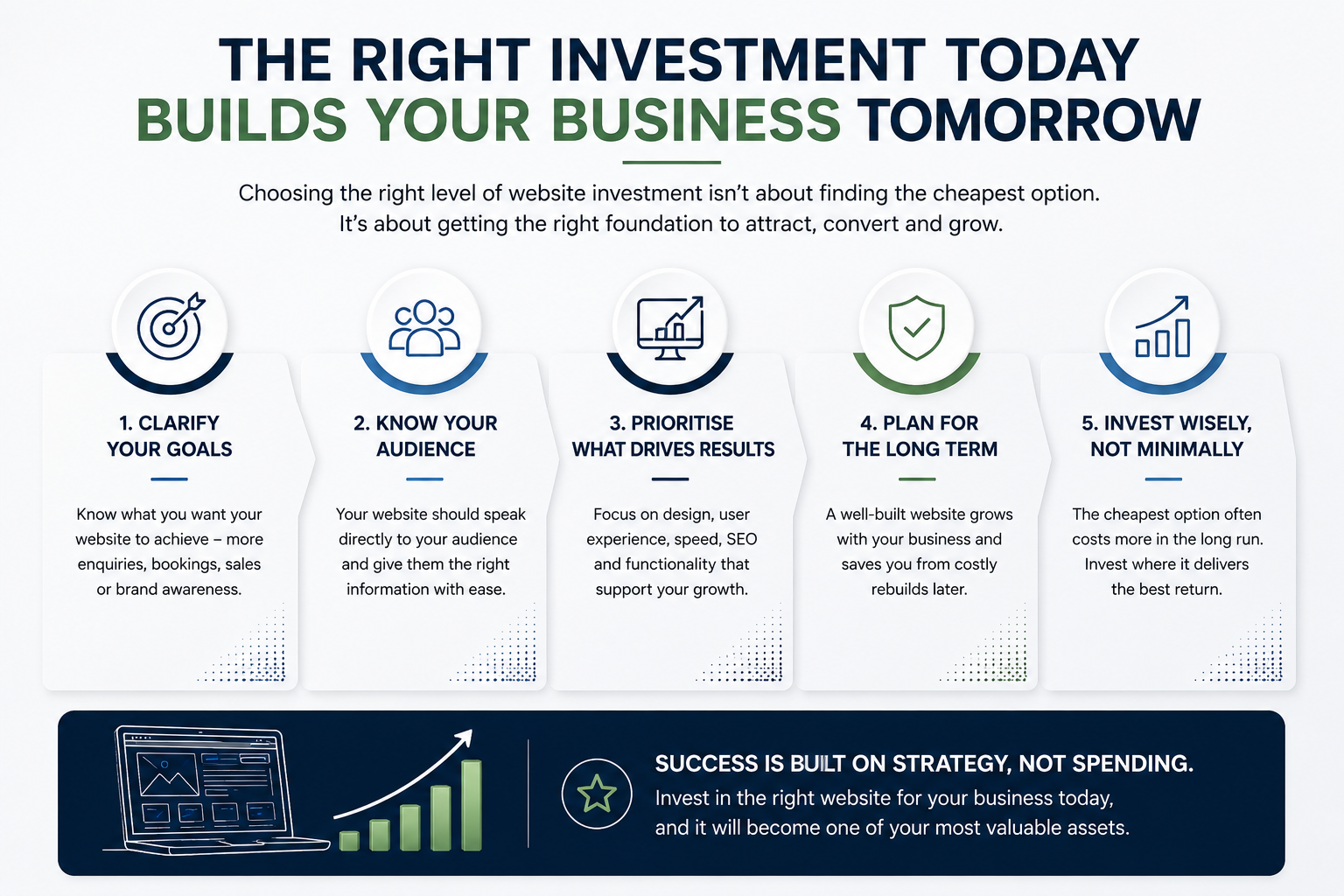
Prioritise the elements that drive results now while leaving room for the website to evolve. A sound foundation can reduce avoidable rework and support future services, campaigns and systems.
Website Investment Checklist
Before deciding what to spend, ask:
- What should the website help the business achieve?
- Who are the priority customers?
- Which services, products or journeys matter most?
- Does the website need bookings, payments, ecommerce or lead qualification?
- Which existing systems must connect?
- How important are SEO, advertising and content growth?
- Who will provide and maintain the content?
- What level of ongoing support is required?
- What would a poor customer journey cost in lost time or missed opportunities?
- Can the solution adapt as the business grows?
These answers make it easier to compare proposals on scope and value rather than price alone.
Explore more practical guidance in the AL Digital Insights hub.
Not sure what level of website investment makes sense for your business?
AL Digital can help you define the right scope around your goals, customer journey, functionality and long-term plans.
Explore Our ServicesGet a Free Quote